
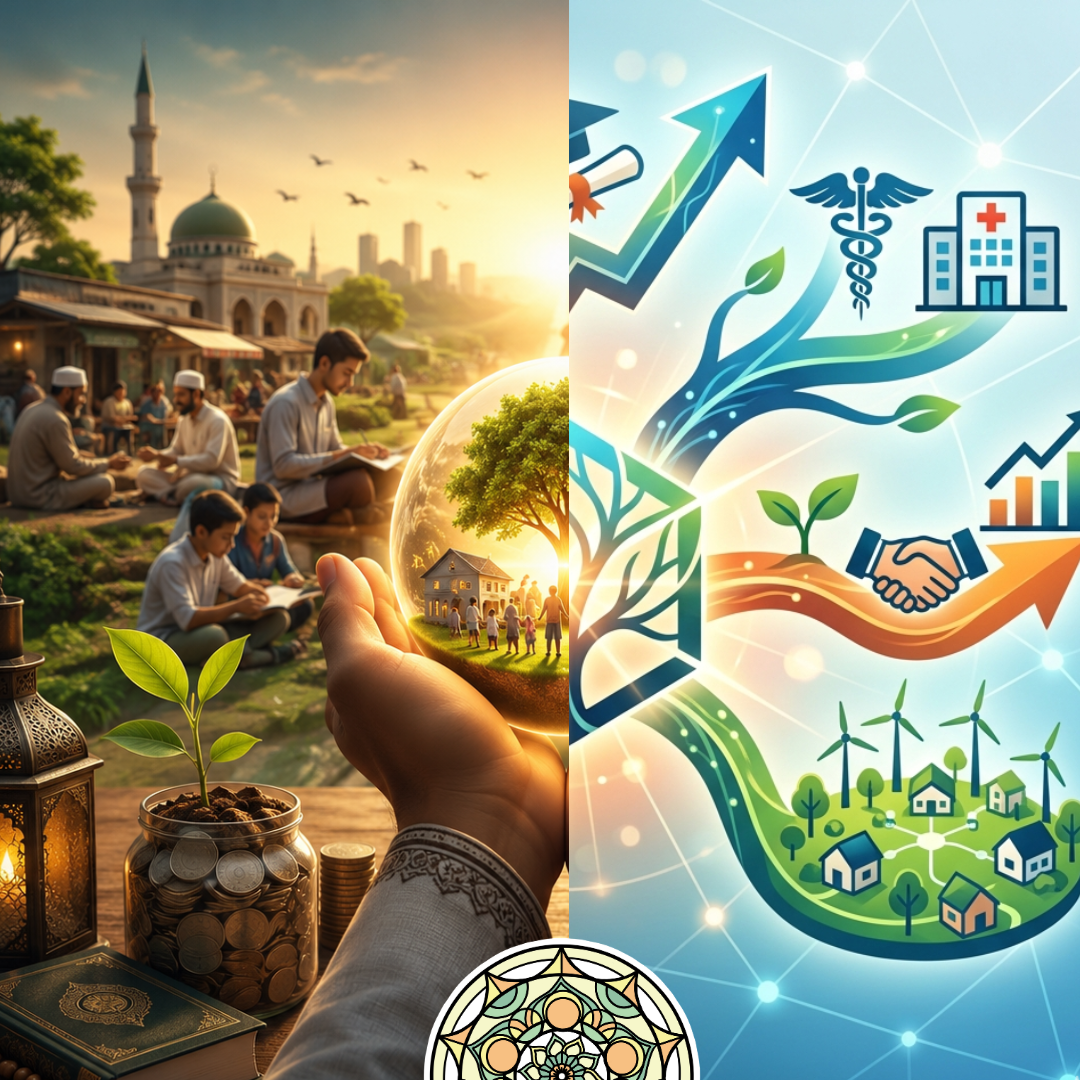
BAITULMAAL Network : The Futuristic Community Powered Minority Muslims' Social & Financial Upliftment Initiatives in Bengal
By WBmuslim.com • 29 May 2026
As political and economic uncertainty grows, community-driven financial systems , combining Islamic social finance with AI , technology, transparency and education-focused welfare, we Muslims can build self-sustaining ecosystems independent of political dependency.A centralized controlled but decentralized Baitulmaal Network can transform how Zakat, Ushr, Fitra, Sadaqah, and Qurbani funds are collected and utilized across villages, blocks, and districts.
Why Muslim Communities Need a Structured Social Finance System ?
Scattered charity often creates temporary relief but fails to produce long-term transformation. Most donations are distributed individually without strategic planning, data tracking, or sustainable development goals.
A structured Islamic financial system can convert emotional charity into organized community development by funding education, healthcare, employment, and economic empowerment at the grassroots level.The future will increasingly belong to communities that can build their own systems of education, welfare, employment, and social support. A modern Baitulmaal network has the potential to become more than a charity platform — it can evolve into a complete socio-economic framework capable of nurturing generations with stability, opportunity, and self-reliance. In that sense, a self-sustaining community economy is not merely possible; it is one of the most important pathways toward long-term social empowerment in the modern world.
What is a Modern Baitulmaal Network ?
Traditionally, Baitulmaal refers to the Islamic treasury system responsible for managing public welfare funds. In the modern age, this concept can evolve into a digital, transparent, and community-governed financial network.
The proposed system connects: Village → Block → District → State
Every local unit becomes financially accountable while remaining connected to a larger welfare ecosystem.Small contributions, when organized collectively, can build powerful institutions.
From villages to districts, and from districts to the entire state, a transparent Islamic social finance ecosystem has the potential to reshape the future of community development in Bengal and beyond.
Collective Zakat/Donation Management Can Create Massive Social Impact
Most Zakat funds are currently distributed in fragmented ways. While the intention is noble, the impact remains limited.Imagine if an entire village collectively managed Zakat , Fitra, Sadaqah , Donations for a social Upliftment goal The combined fund could finance
Student scholarships
Modern education centers
Vocational training
Emergency medical support
Widow assistance
Small business initiatives
Technology Can Bridge Transparency and Trust gap
Transparency increases trust. Trust increases participation.One major reason many people hesitate to donate collectively is lack of transparency.
A web-based Baitulmaal platform can solve this through Public dashboards , Real-time fund tracking , Expense transparency, Monthly reports, Village-wise analytics , Beneficiary verification systems
Village-Based Committees will be the Foundation
The strength of this model lies in local participation.
Every village can register its own Baitulmaal committee with :
President , Secretary , Treasurer , Education Coordinator , Welfare Coordinator , Village wise Auditors
This decentralized structure ensures that local people understand local problems and can make faster, more effective welfare decisions.
Education Must Become the Primary Investment
The most powerful long-term solution for social upliftment is modern education with Islamic Values .
Instead of distributing all funds as short-term charity, a large portion should be invested in :
School support , College scholarships , Coaching for competitive exams , IT and digital skills, Vocational education , Professional training
Smart Features Like Nisab Calculators Can Increase Participation
Many Muslims are unsure about
Whether Zakat is obligatory for them , How much they should pay, Which assets are included
A built-in Nisab and Zakat calculator can simplify the process by automatically calculating obligations based on :
Gold, Silver, Savings, Business assets , Investments , Debts
This makes Islamic financial participation easier, accurate, and accessible for everyone
Beneficiary Management Must Be Data-Driven & Tracked Properly
To ensure fairness and efficiency, beneficiaries should be verified and categorized digitally.Priority scoring and verification systems can help committees allocate funds based on urgency and genuine need.
Public Leaderboards village/district wise can encourage Healthy Competition
Healthy competition encourages stronger community participation and accountability.District and village-level leaderboards can showcase
1.Most active villages
2.Highest education spending
3.Best transparency records
4.Maximum donor participation
5.Most welfare beneficiaries category and others
A Self-Sustaining Community Economy Is Possible and is the future
When communities become economically organized, they reduce dependency on political structures and external uncertainty.The long-term vision is not just charity — it is economic independence.The true power of a self-sustaining economy lies not only in money, but in organization. Communities that are financially organized become socially confident, educationally stronger, and institutionally resilient. They are able to respond to emergencies faster, support vulnerable families more effectively, and invest in long-term development without constantly waiting for external intervention. Such a model creates dignity because it allows communities to solve their own problems through collective effort and strategic planning.
BEFORE YOU LEAVE
The future of community empowerment lies in organization, transparency, and collective responsibility.
A digital first Baitulmaal Network is not merely a donation platform — it is a blueprint for social transformation. By systematically organizing Zakat, Fitra, Sadaqah, and other Islamic social donations, We , Muslims , can invest our money in community education, social welfare, uplifting dignity, and long-term economic strength.Small contributions, when organized collectively, can build powerful monetary impact .From villages to districts, and from districts to the entire state, a transparent Islamic social finance ecosystem has the potential to reshape the future of community development in Bengal and building future of our nation